
Community Engagement and Social Investment
The Company has established a community development framework encompassing six key dimensions: PSP Sharing, PSP Better Life, PSP Give Health, PSP Green Life, PSP Safety Matters, and PSP Collab, in alignment with the Company’s community development strategy.
The Company aims to assess the social outcomes and impacts of its community development initiatives through both quantitative and qualitative approaches. Social Return on Investment (SROI) assessments will be applied to key projects, alongside community satisfaction surveys, with the findings used to continuously improve the Company’s community development initiatives.
In 2025, the Company allocated a total budget of THB 6,268,352.25 to support a wide range of community and social development initiatives. These initiatives encompassed various dimensions, including quality of life enhancement, health and well-being, community economic development, and environmental conservation, under the principle of Creating Shared Value (CSV).
PSP Sharing (Sharing and Supporting Communities)
- Provided financial support of THB 5,000,000 for the construction of a crematorium pavilion at Wat Klang Ang Kaeo, Samut Sakhon Province, on 26 February 2025.
- Organized the “PSP Share & Smile” initiative to deliver essential supplies to children at the Baan Tantawan Foundation, Nakhon Pathom Province, on 5 June 2025.
- Provided 60 educational scholarships to young students, totaling THB 200,000, on 19 July 2025.
- Provided relief supplies valued at THB 100,000 to support flood victims in Southern Thailand through Samut Sakhon Province on 27 November 2025.
PSP Better Life (Enhancing Community Quality of Life)
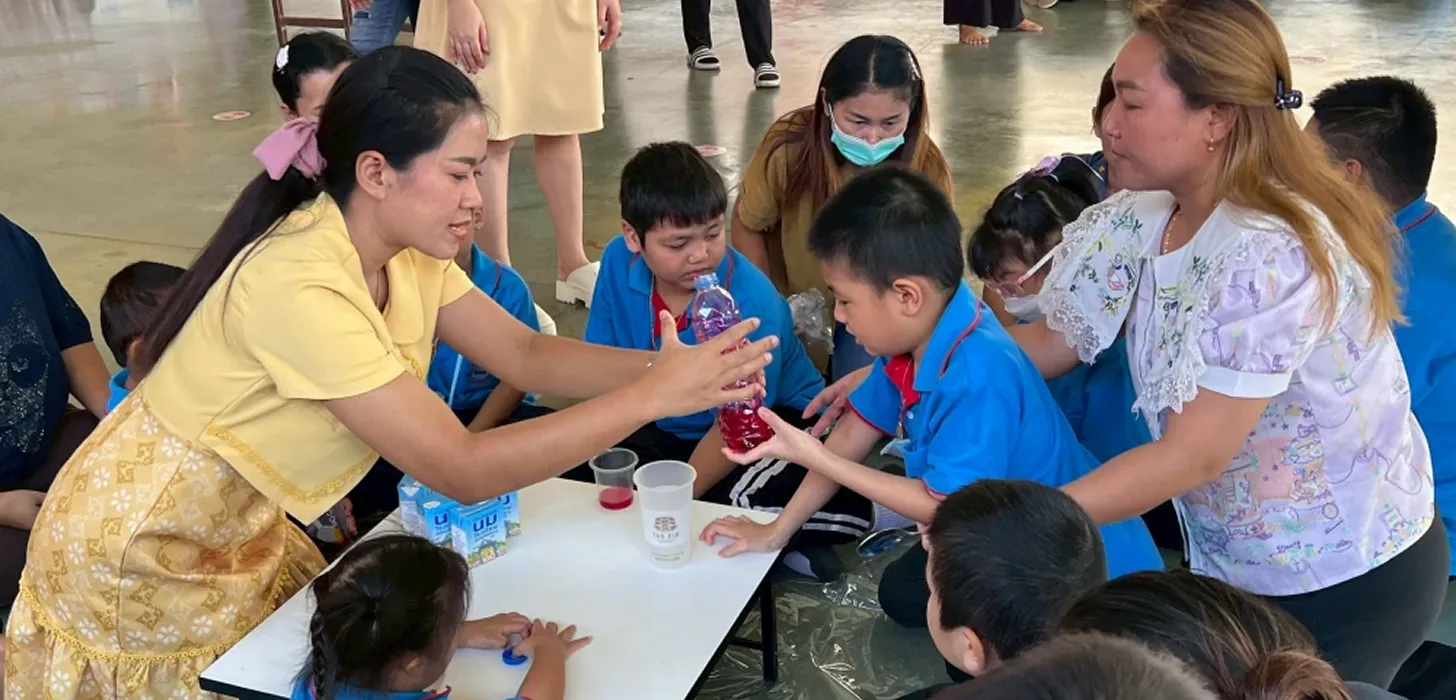
- Organized National Children’s Day activities alongside a community dialogue initiative, with a total project value of THB 63,000, on 13 January 2025.
- Provided sponsorship support for the Department of Industrial Works Running Event, amounting to THB 100,000, on 16 January 2025.
- Participated in the “Mayor Meets the People” community outreach program at Tha Chin Subdistrict Municipality, providing vehicle inspection and engine oil change services, promoting road safety awareness, and distributing safety helmets to community members on 20 July 2025.
- Provided sponsorship support for the “Tha Chalom Mini Marathon” event, amounting to THB 100,000, on 19 October 2025.
PSP Give Health (Promoting Health and Well-being)
- Donated a respiratory support device valued at THB 20,000 to a charitable foundation on 11 April 2025.
PSP Green Life (Promoting Environmental Sustainability)
- Organized the “Returning Aquatic Life to Their Natural Habitat” initiative to support the restoration of the Tha Chin River ecosystem on 8 May 2025.
- In collaboration with the Samut Sakhon Fisheries Association, organized the “Sustaining the Upper Gulf of Thailand Marine Ecosystem” initiative, involving the release of aquatic species and the installation of artificial reefs, with a budget of THB 20,000, on 8 May 2025.
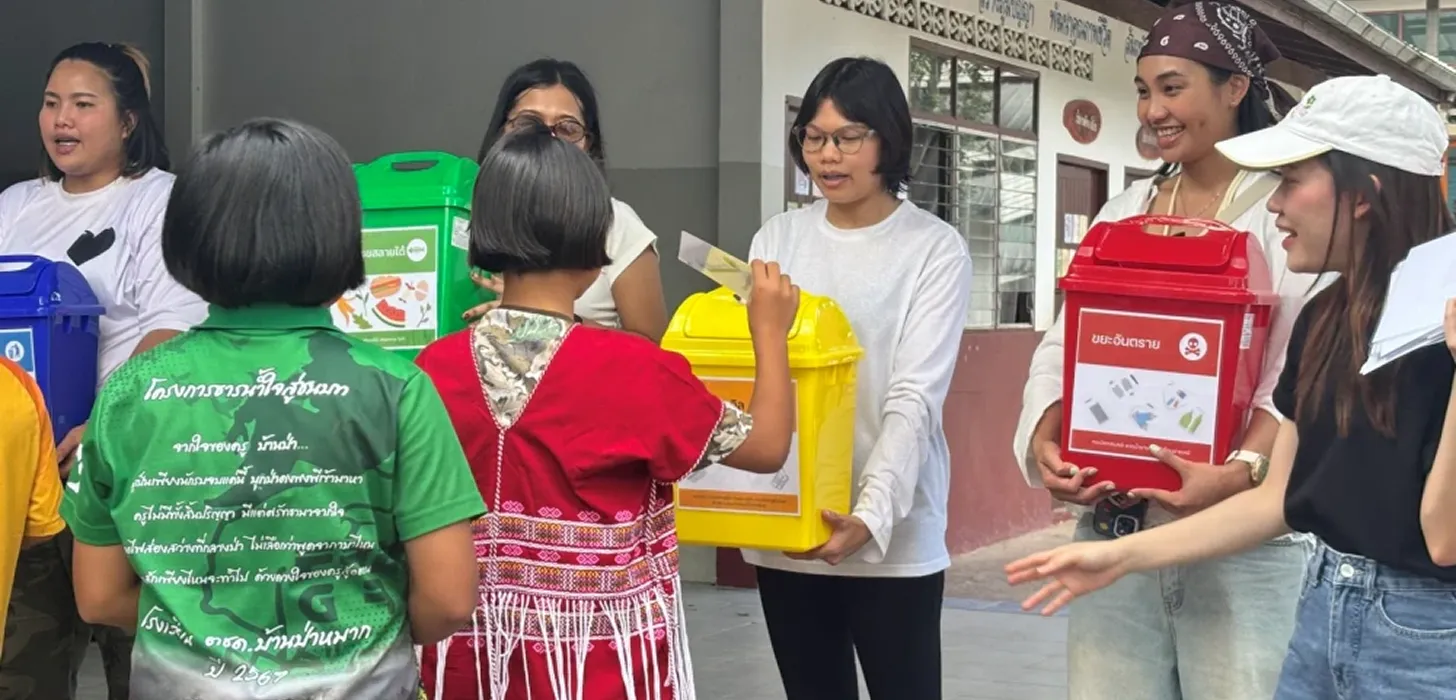
- Implemented waste management initiatives, including the Waste Bank Project in collaboration with Tha Chin Subdistrict Municipality, as well as the “Dust-Free Homes, Safer Roads” campaign, with a combined budget exceeding THB 90,000.
- Implemented a motorcycle engine oil change program combined with road safety education, with a total budget of THB 39,150.25, on 20 July 2025.
PSP Safety Matters (Enhancing Community Safety)
- Organized the “Water Police Teach Children to Swim” program for 60 children and youth, with a budget of THB 25,000, on 26–27 April 2025.
- Organized the “PSP Building Safer Communities” initiative, providing basic firefighting and fire evacuation training to residents of the Wat Chi Pha Khao community on 31 October 2025.
PSP Collab (Fostering Community Economic Development through Collaboration)
- In 2025, the Company was in the process of exploring opportunities and developing collaborative initiatives with network partners to strengthen local economic development and enhance community livelihoods.
Challenges and Opportunities
Community engagement and social investment represent both strategic risks and opportunities that are directly linked to the Company’s Social License to Operate, corporate reputation, and long-term business continuity. This is particularly relevant given the nature of the Company’s lubricant, chemical, and logistics businesses, which operate in close proximity to surrounding communities. The Company therefore adopts a comprehensive approach to assessing and managing these issues, balancing risk mitigation with the creation of shared value for both the business and society.
Challenges
One of the key challenges is that the Company’s operational facilities are located in areas surrounded by local communities, which may be affected, directly or indirectly, by business activities related to chemical manufacturing and logistics operations. Designing community development programs that effectively address genuine community needs across multiple dimensions—including health, education, environmental stewardship, local economic development, and safety—requires a systematic and continuous approach to local context assessment, stakeholder engagement, and community participation.
Another key challenge lies in creating sustainable and measurable positive impacts beyond one-time charitable contributions. This requires the development of integrated community programs that empower communities to become more self-reliant in the long term, supported by systematic monitoring and evaluation of Social Return on Investment (SROI). It also necessitates close collaboration with government agencies, local administrative organizations, and a diverse range of stakeholders and network partners. Furthermore, the fair and transparent management of community grievances and the provision of appropriate remedies for any adverse impacts remain critical to maintaining stakeholder trust and fostering long-term relationships with surrounding communities.
Opportunities
From an opportunity perspective, the systematic implementation of community engagement and social investment initiatives under the principles of Creating Shared Value (CSV) and the Triple Bottom Line provides the Company with significant opportunities to strengthen its Social License to Operate and foster positive relationships with surrounding communities, which serve as a critical foundation for long-term business continuity. In 2025, the Company invested a total of THB 6,268,352.25 in social development initiatives across six strategic pillars—PSP Sharing, PSP Better Life, PSP Give Health, PSP Green Life, PSP Safety Matters, and PSP Collab—demonstrating its commitment to evolving its role from a business operator to a trusted community development partner.
Furthermore, encouraging employee participation in volunteer activities and community development programs presents an opportunity to cultivate a corporate culture rooted in social responsibility while enhancing employee engagement and sense of purpose. At the same time, the development of collaborative partnerships through the PSP Collab initiative to support local economic development and generate sustainable income opportunities for communities creates pathways for long-term shared value creation between the Company and society.
Moreover, aligning community engagement and social investment practices with ESG principles, coupled with transparent and measurable performance disclosure, enhances stakeholder confidence among shareholders, investors, customers, and other key stakeholders. This, in turn, contributes positively to the Company's reputation, competitiveness, and long-term enterprise value.
Management Approach and Value Creation
The Company implements its corporate social responsibility initiatives in accordance with the principles of sustainable development, balancing the three dimensions of the Triple Bottom Line—economic, social, and environmental performance. These principles are integrated into the Company’s corporate mission and aligned with the United Nations Sustainable Development Goals (SDGs) through five community development strategies, a systematic management approach, and a project implementation framework encompassing six strategic pillars, as follows:
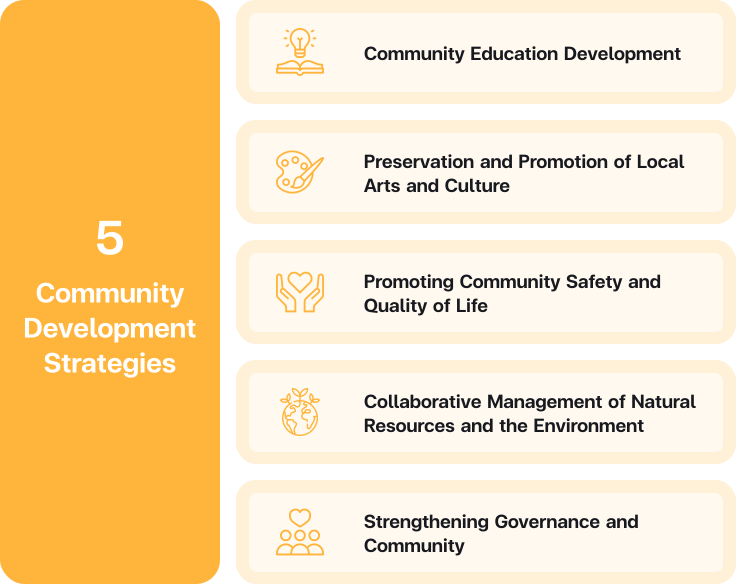
- Community Education Development — Supporting educational scholarships, learning materials, and knowledge-sharing initiatives on safety, environmental stewardship, and career development, as well as promoting experiential learning opportunities in collaboration with educational institutions.
- Preservation and Promotion of Local Arts and Culture — Supporting local traditions and cultural heritage while creating economic value from community wisdom through the development of local products, community marketplaces, and market access opportunities.
- Promoting Community Safety and Quality of Life — Implementing health and safety initiatives, including community health screening programs, accident prevention campaigns, and improving access to essential healthcare services.
- Collaborative Management of Natural Resources and the Environment — Promoting waste reduction, waste segregation, water resource restoration, tree planting initiatives, and environmental awareness programs in partnership with local communities.
- Strengthening Governance and Community Engagement — Promoting stakeholder participation in decision-making processes, ensuring transparency in community initiatives, and raising awareness of legal compliance, human rights, and ethical conduct to strengthen the Company’s Social License to Operate.
11 Community Development Principles and Practices
- Establish clear sustainability policies and objectives that are aligned with the Company’s material topics and the Sustainable Development Goals (SDGs), in accordance with the principles of GRI 2: Governance and Strategy.
- Assess community needs and develop area-based strategies using evidence-based social, economic, and environmental data to ensure that community development initiatives effectively address local priorities and challenges.
- Promote stakeholder engagement through public consultations, focus group discussions, and diverse communication channels to ensure meaningful participation, inclusive dialogue, and responsive decision-making.
- Establish a governance structure through the Sustainability Committee and the Community Relations Committee, with clearly defined roles, responsibilities, and accountability mechanisms to oversee community development and social investment initiatives.
- Develop and maintain a comprehensive Community Database to systematically collect and manage information on demographics, economic conditions, environmental factors, and community-related risks, supporting informed decision-making and effective community development planning.
- Conduct regular collaborative meetings and foster integrated partnerships among the Company, local communities, and relevant stakeholders to strengthen cooperation, mutual understanding, and sustainable development outcomes.
- Establish strategic directions and regularly review policies on an annual basis, taking into consideration performance outcomes, stakeholder expectations, and changes in the external operating environment.
- Design and implement community programs, initiatives, and communication activities effectively, ensuring alignment with the Company’s five community development strategies and sustainability objectives.
- Manage and implement community initiatives in accordance with good governance principles, ensuring transparency, accountability, budgetary control, and effective oversight throughout the project lifecycle.
- Establish accessible channels for community members, both within and outside the operational area, to provide feedback, submit grievances, and seek remediation. Community members may contact the Community Relations Department via telephone at +66 89 200 1269 or by email at wanida@psp.co.th
- Assess community satisfaction and social returns through both qualitative and quantitative approaches, while exploring and developing methodologies for evaluating Social Return on Investment (SROI) to measure the effectiveness and long-term impact of community development initiatives.
Six-Pillar Community Development Framework

PSP Sharing

PSP Better Life

PSP Give Health

PSP Green Life

PSP Safety Matters

PSP Collab
Stakeholders Directly Impacted