Climate Change and Energy Management


Climate Change Management
Aim to achieve Net Zero greenhouse gas emissions by 2050 by developing a robust management system and implementing concrete greenhouse gas emission reduction measures.
Prepare the Carbon Footprint for Organization (CFO) and identify significant sources of greenhouse gas emissions.
Develop a Decarbonization Pathway aligned with the Net Zero target.
Energy Management
Reduce organizational energy consumption by 5% by 2027, compared with the 2023 baseline.
Climate Change Management
The Company manages greenhouse gas emissions across five main operating sites, including the Head Office, Sathorn Branch Office, Plant 1 (PSP 1), Plant 2 (PSP 2), and Plant 3 (PSP 3), systematically covering Scope 1, Scope 2, and Scope 3 emissions.
Greenhouse Gas Emissions in 2025 (tCO2e)
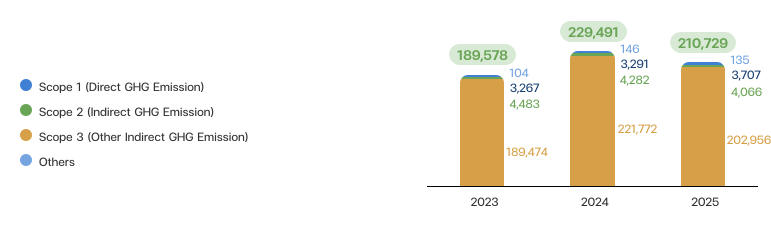
Total emissions across Scope 1, Scope 2, and Scope 3 amounted
210,729
tCO2e
Greenhouse gas emissions under Scope 1 and Scope 2
7,773
tCO2e
- Total emissions across Scope 1, Scope 2, and Scope 3 amounted to 210,729 tCO2e representing a significant reduction compared to 2024 and indicating progress in overall emission control, although still higher than the 2023 level.
- Greenhouse gas emissions under Scope 1 and Scope 2 totaled 7,773 tCO2e showing a slight increase from the previous year. This reflects the need for the Company to closely monitor direct emissions from production processes, alongside continued efforts to improve energy efficiency.
- Scope 1 emissions were 3,707 tCO2e, an increase from 2024, primarily driven by fuel combustion in production processes. This highlights the importance of measures to reduce fossil fuel consumption and improve production efficiency.
- Scope 2 emissions were 4,066 tCO2e, showing a continuous decrease over the past two years. This reflects the positive impact of improved electricity consumption control and more efficient energy management.
- Scope 3 emissions were 202,956 tCO2e, decreasing from 2024 but remaining at a high level compared to 2023. The primary emission source continues to be Category 1: Purchased Goods and Services, particularly base oil. This highlights that a key challenge for the Company lies in managing emissions across the value chain.
In terms of data credibility, the 2025 organizational greenhouse gas emissions and removals report was verified by an ISO certification body in accordance with ISO 14064-1 and submitted for certification registration with the Thailand Greenhouse Gas Management Organization (Public Organization).
The Company has made progress in advancing its management structure by establishing a Climate Change Working Group as a key mechanism to define strategic direction and drive the organization’s greenhouse gas management initiatives.
Strategically, the Company is in the process of developing a greenhouse gas (GHG) emission reduction pathway, focusing on practical and implementable measures such as improving energy efficiency, increasing the use of renewable energy, and reducing fossil fuel consumption, while also preparing to apply the Science Based Targets initiative (SBTi) framework.
The Company has begun integrating climate-related strategy, risks, opportunities, and performance indicators into its disclosure processes to enhance management effectiveness and improve transparency in reporting.
For emissions that cannot be directly reduced, the Company is exploring options to invest in carbon offset projects, both domestically and internationally, with recognized standards to support long-term emission reduction targets.
In addition, the Company is preparing to disclose climate-related information in accordance with IFRS S2 and TCFD, covering all four pillars: Governance, Strategy, Risk Management, and Metrics and Targets. This will further enhance governance and disclosure practices in alignment with international standards.
Energy Management
In 2025, the Company systematically planned and implemented energy management measures to drive progress toward the long-term target of reducing energy consumption by 5% by 2027 compared to the 2023 baseline. The initiatives covered improvements in equipment efficiency and operational processes, along with strengthening internal awareness across the organization.
The amount of purchased electricity from the grid has shown a continuous decreasing trend, from 8,966,209 kWh in the base year 2023 to 8,559,171 kWh in 2025. This reflects the positive and tangible outcomes of the Company’s internal electricity efficiency improvement measures.
However, when considering total energy consumption, it increased in 2025 to 66,186,786 MJ/kWh higher than both the 2023 baseline and 2024. This was mainly driven by increased fuel consumption, rising from 702,000 to 857,000 MJ/L, indicating that the Company still faces challenges in controlling overall energy use.
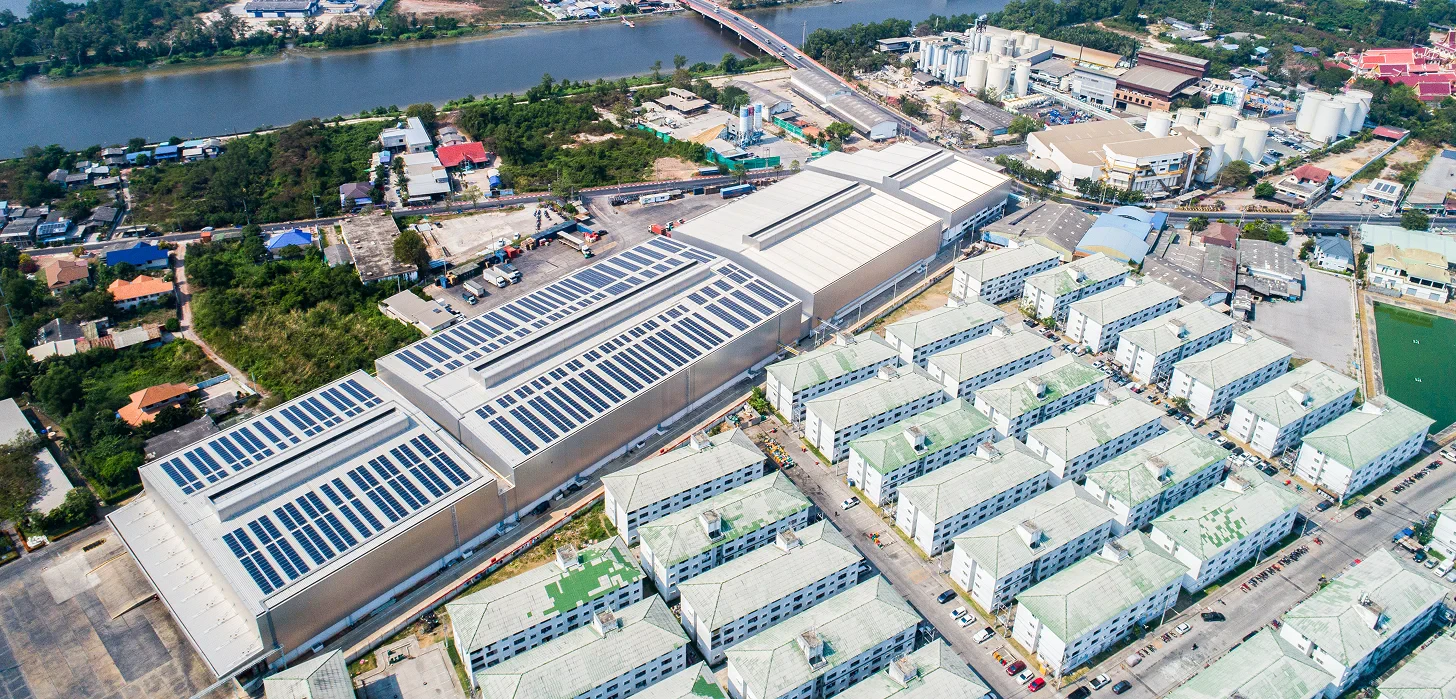
The key renewable energy project is Phase 1 of the Solar Rooftop installation, with a total installed capacity of 1.32 MW (operational capacity of 1.19 MW). The system generates approximately 1.79 million kWh per year resulting in electricity cost savings of around 7.1 million THB per year and reducing greenhouse gas emissions by approximately 930 tCO2e per year.
In the thermal energy conservation program, the Company implemented high-impact energy-saving measures through the optimization of fuel oil usage in the Hot Oil No.8 system resulting in energy savings of 676,837.73 MJ/year (equivalent to 245,978.10 THB/year or approximately 3.41% of total baseline energy consumption). In addition, the reduction of heat losses during Hot Oil system cool-down contributed further savings of 285,156.54 MJ/year (equivalent to 103,617.93 THB/year or approximately 1.44%).
In the electrical system and production process improvement program, the Company implemented several measures that delivered tangible energy savings including: the development of an MDB GP room checklist (reducing electricity consumption by 29,233.15 kWh/year), leakage reduction in the Plant GP area (22,084.92 kWh/year), motor replacement in the VRU system (14,417.50 kWh/year), improvement of the Circulate V1 system (12,202.65 kWh/year), optimization of the air-conditioning system in the Plant 2 control room (6,051.46 kWh/year), and motor replacement for BS 150 (4,937.14 kWh/year).
In terms of organizational culture, the Company conducted training and awareness programs on energy conservation for more than 60% of all employees, aiming to integrate efficient energy use into daily operations as part of normal working practices.
In terms of regulatory compliance, the Company’s energy conservation performance has been verified and registered by certified Energy Managers under the Department of Alternative Energy Development and Efficiency, Ministry of Energy. This confirms that the Company systematically governs, oversees, and manages energy in compliance with applicable legal requirements.
In the next phase, the Company will focus on continuously controlling and reducing overall energy consumption, while enhancing the accuracy and standardization of energy data. This includes improving the efficiency of equipment, machinery, and utilities systems, as well as exploring opportunities to further maximize the utilization of solar energy.
Challenges and Opportunities
Climate Change Management
The management of greenhouse gas (GHG) emissions represents both a strategic risk and opportunity for the Company. On the risk side, transition risks arise from increasingly stringent regulatory and disclosure requirements under frameworks such as TCFD and IFRS S2. In addition, direct emissions (Scope 1) have increased to 3,707 tCO2e, while Scope 3 emissions remain significantly high at 202,956 tCO2e, largely concentrated in the value chain—particularly base oil—requiring strong collaboration with suppliers to reduce emissions. Physical risks associated with climate change may also impact long-term operational continuity. Conversely, these challenges create significant climate-related opportunities, including cost reduction through energy efficiency improvements and renewable energy adoption, enhanced investor confidence supported by the verified and registered Organizational Carbon Footprint (CFO) with the Thailand Greenhouse Gas Management Organization (TGO), and the development of a low-carbon transition strategy through a GHG Emission Pathway and carbon offset mechanisms. The Company manages these risks and opportunities systematically under the TCFD framework, covering all four pillars: Governance, Strategy, Risk Management, and Metrics and Targets, in alignment with IFRS S2 disclosure requirements and in support of its Net Zero greenhouse gas emissions target by 2050.
Energy Management
Energy management represents both a strategic challenge and opportunity that directly affects the Company’s operating costs, production efficiency, regulatory compliance, and long-term competitiveness. The Company therefore conducts a comprehensive analysis of this issue to manage risks while simultaneously creating value through efficient energy use.
In terms of challenges, although the Company has continuously reduced purchased electricity consumption from the grid to 8,559,171 kWh in 2025 through efficiency improvement measures, total energy consumption increased to 66,186,786 MJ/kWh, higher than both the 2023 baseline and 2024. This was mainly driven by increased fuel consumption, reflecting challenges in controlling overall energy use and achieving the defined energy reduction targets.
In addition, the Company needs to further enhance the quality and standardization of energy data across different energy types to ensure reliable tracking of trends, performance comparison, and evaluation of mitigation measures. At the same time, energy management must continue to comply with the Ministerial Regulation on Energy Management B.E. 2552 (2009) and other relevant regulatory requirements.
In terms of opportunities, investment in energy efficiency improvement measures has delivered tangible and cost-effective savings. In particular, Phase 1 of the Solar Rooftop project (1.32 MW) generates electricity cost savings of approximately 7.1 million THB per year and reduces greenhouse gas emissions by around 930 tCO2e annually. This is complemented by thermal efficiency measures and electrical system improvements that further reduce energy costs in production processes.
The expansion of renewable energy utilization and the exploration of maximizing solar energy potential provide opportunities for the Company to reduce dependence on external energy sources and enhance long-term energy security. In addition, certification and registration by the Energy Manager in accordance with legal requirements further strengthen credibility among stakeholders.
Moreover, engaging more than 60% of employees in energy awareness and participation programs represents a key opportunity to foster an organizational culture of energy efficiency, supporting cost reduction and strengthening long-term competitiveness in a sustainable manner.
Management Approach and Value Creation
Climate Change Management Approach
The Company systematically manages greenhouse gas emissions by integrating climate change and GHG emissions as part of its corporate sustainability management. This approach supports the reduction of environmental impacts while enhancing business resilience in the context of long-term climate change. The details are as follows.
- A Climate Change Working Group has been established to drive the Company’s policies, plans, and measures related to greenhouse gas management.
- The Organizational Carbon Footprint (CFO) has been prepared to systematically assess and collect greenhouse gas emission data, covering Scope 1, Scope 2, and Scope 3 as appropriate.
- Use greenhouse gas emissions data as a basis to analyze significant emission sources and define appropriate mitigation measures tailored to the business context.
- Study and develop a GHG emission reduction pathway focusing on practical and implementable measures, such as improving energy efficiency, increasing the use of renewable energy, and reducing reliance on fossil fuels.
- Integrate greenhouse gas management with the organization’s climate-related risk and opportunity management processes.
- Prepare for climate-related disclosure in alignment with IFRS S2 and TCFD principles, covering Governance, Strategy, Risk Management, and Metrics and Targets.
- Monitor, evaluate, and regularly report greenhouse gas management performance and progress to senior management.
- Study approaches for utilizing carbon offset mechanisms to address greenhouse gas emissions that cannot be reduced in the short term.
- Continuously improve the quality of greenhouse gas data and disclosure practices to enhance transparency and stakeholder confidence.
Energy Management
The Company manages energy under a specialized Energy Management Working Group responsible for driving energy conservation measures in compliance with applicable laws and organizational targets. A comprehensive energy conservation plan has been developed, covering energy audits and assessments, identification of efficiency improvement opportunities, implementation of energy reduction measures, and continuous monitoring and evaluation of performance. The details are as follows.


Stakeholders Directly Impacted
Climate Change Management


Energy Management